Selected Works
Submerge | Interactive Ocean Ecology
The Problem
Static ocean diagrams present too many relationships at once, overwhelming students, while teachers lack tools to progressively reveal ecosystem complexity.
The Solution
Designed a gamified spatial interface that translates complex ecological systems into a layered exploration experience through progressive disclosure and environmental feedback.
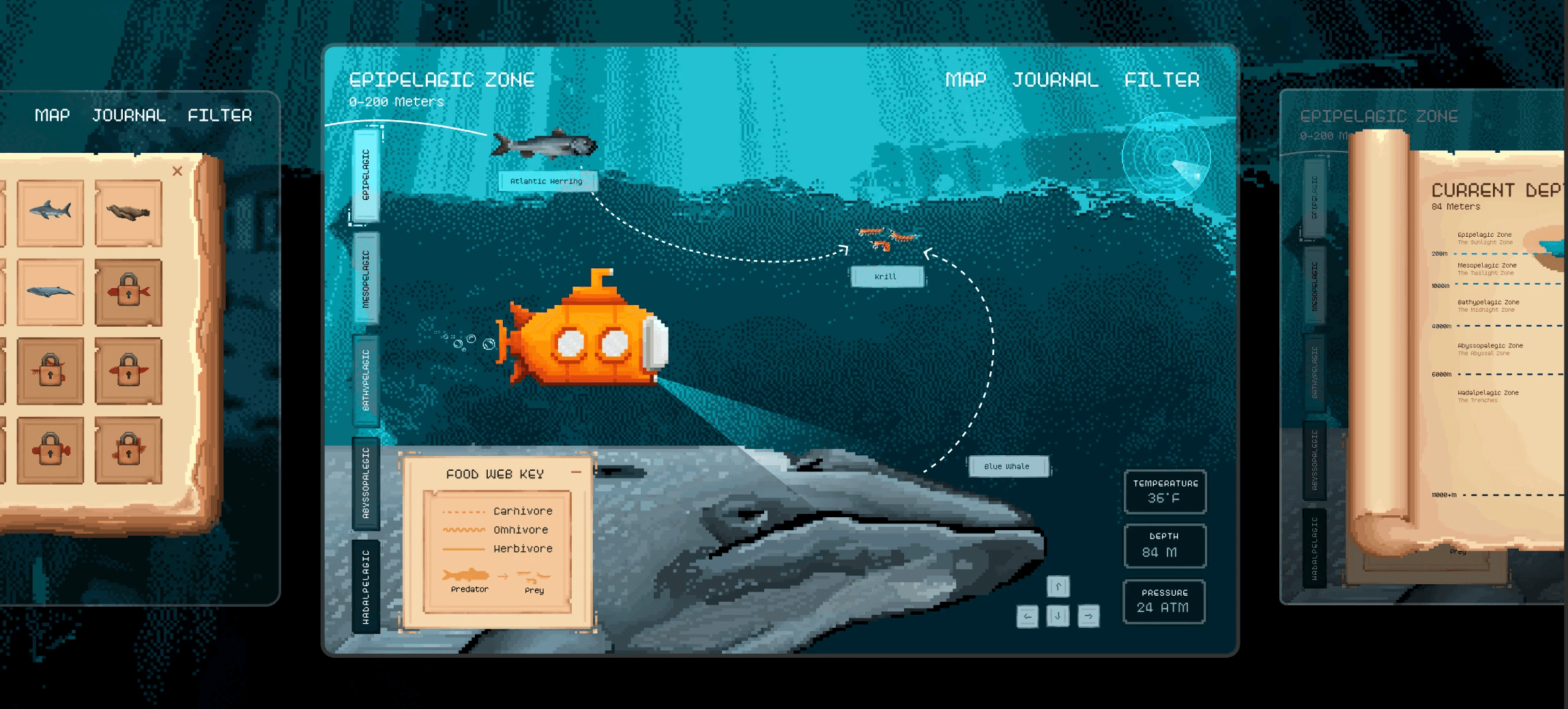
Submerge
Players descend through evolving ocean depth zones to discover marine life, log discoveries in a personal journal, and uncover environmental relationships through guided progression or open exploration.
Full Process
Game Concept
Early Mapping of the Experience
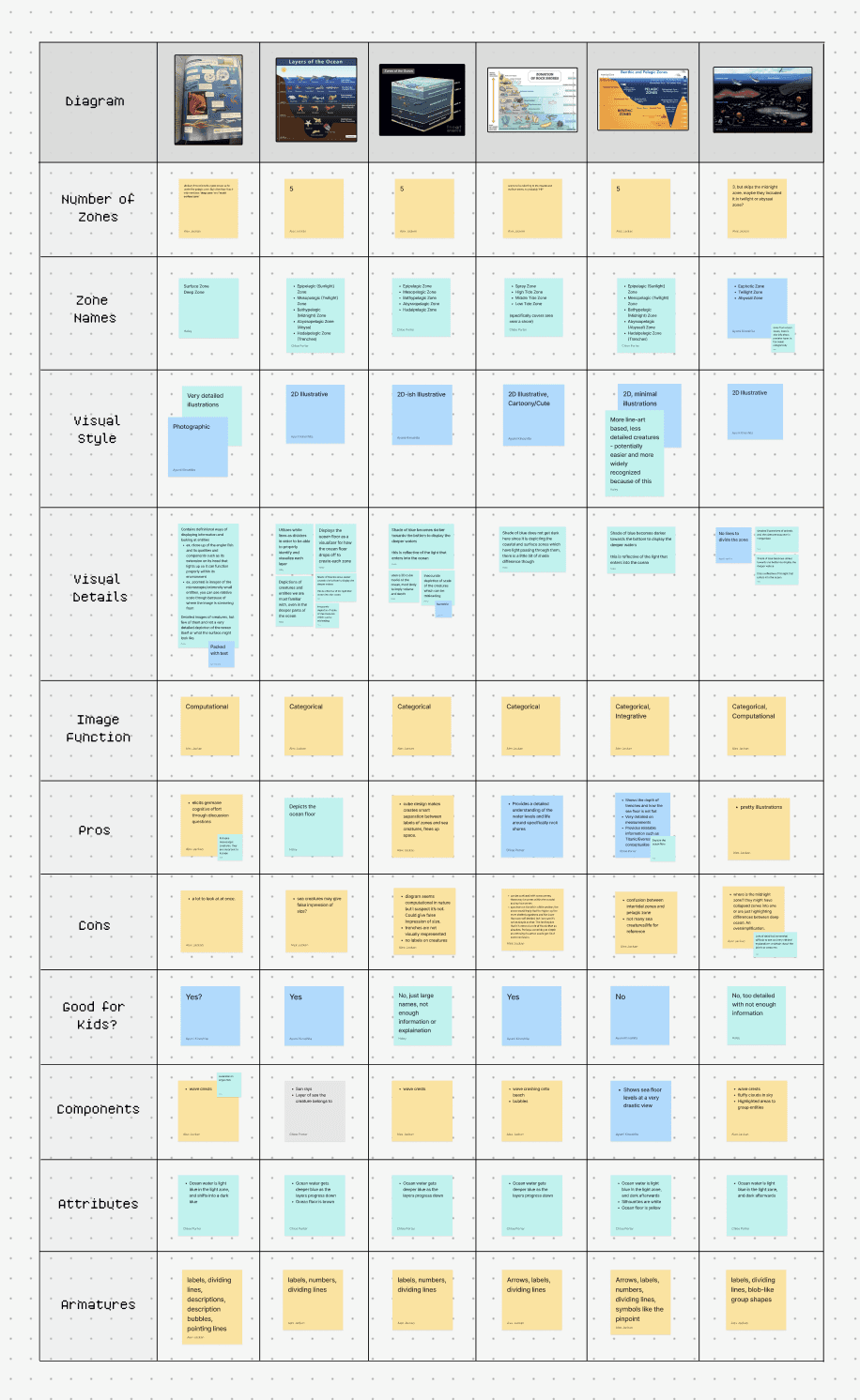
Collaborated to analyze existing oceanography diagrams and identify patterns in hierarchy, density, and relationship clarity. Mapped key learning and gameplay flows, including zone navigation, organism discovery, environmental data awareness, and progressive complexity control.
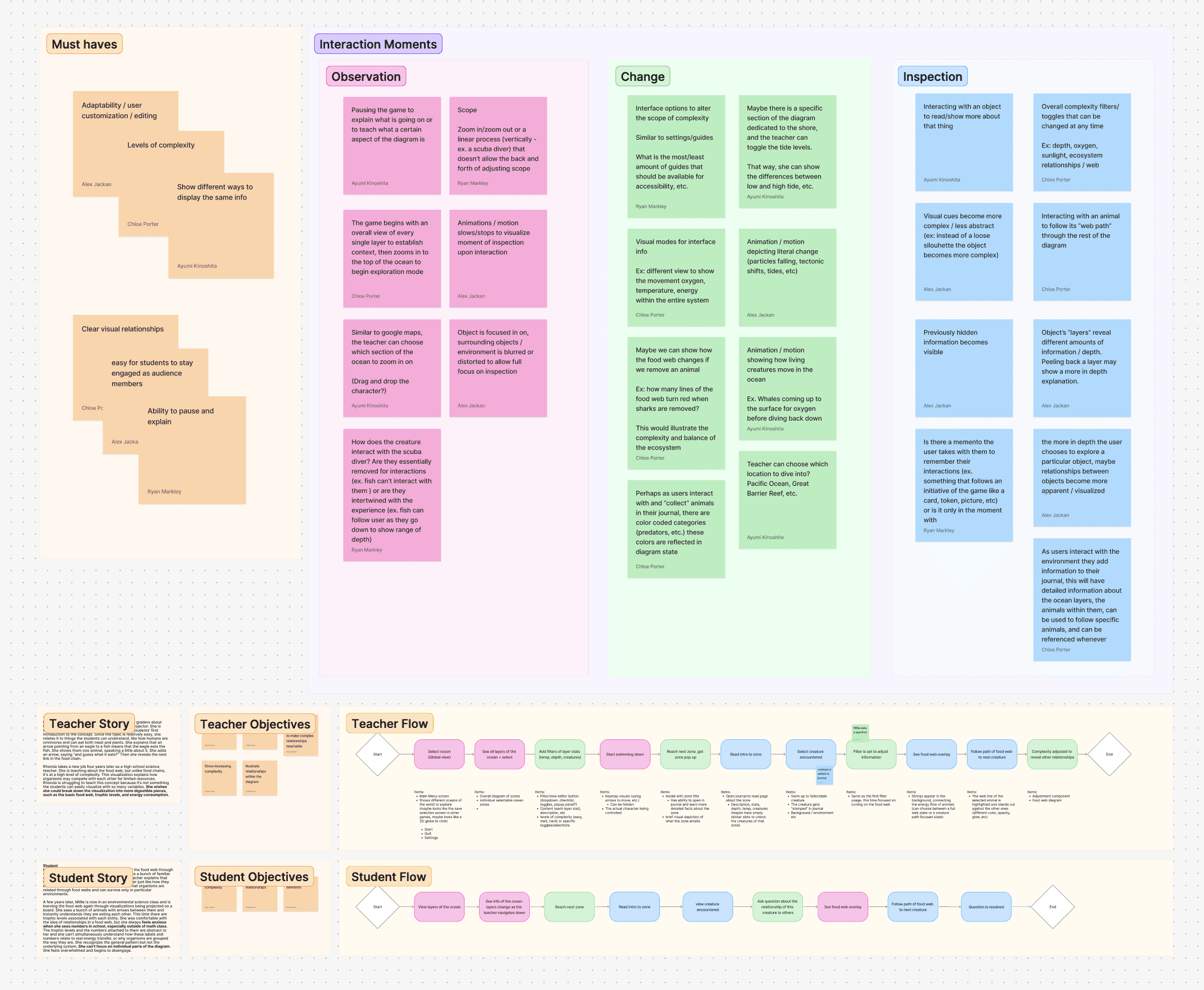
Interaction Moments
OBservation
Establish spatial orientation and ecosystem context through depth cues, atmospheric visuals, and environmental overview.
Change
Adjust variables such as depth and filters to explore how conditions and ecological relationships shift.
inspection
Select organisms or interactions to reveal layered educational details without disrupting overall context.
Task Flow & Low-Fidelity Wireframes
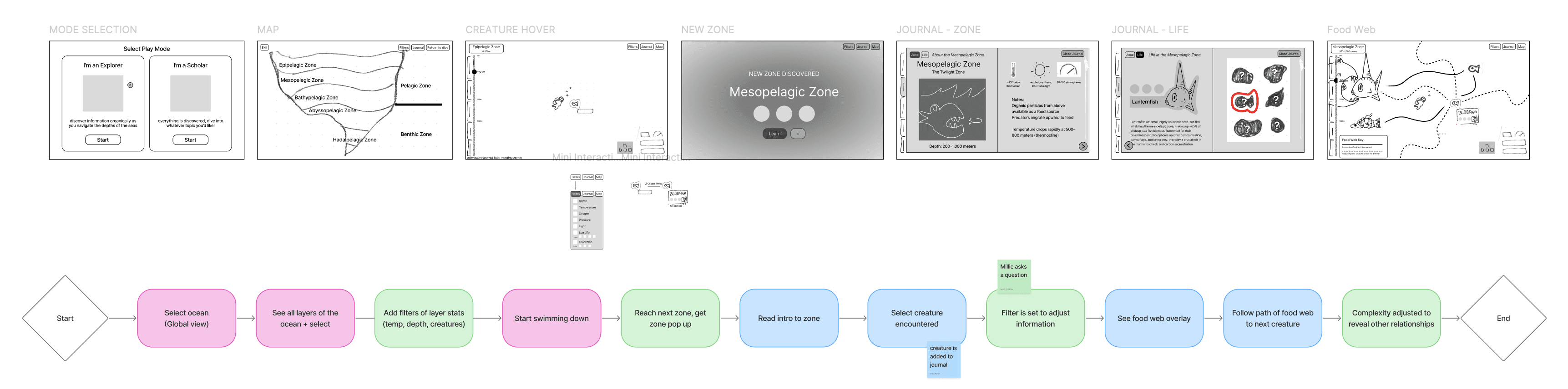
Individually explored wireframe directions, then collaborated to synthesize the strongest concepts into a unified task flow. This process clarified the teaching sequence, interaction hierarchy, and progression of complexity before moving into visual design. Below is the final composite wireframe flow developed as a team.
Visual System
From this stage onward, I independently created the visual and interaction execution, designing the complete visual system and creating all environmental, creature, and interface assets that shaped the final experience.
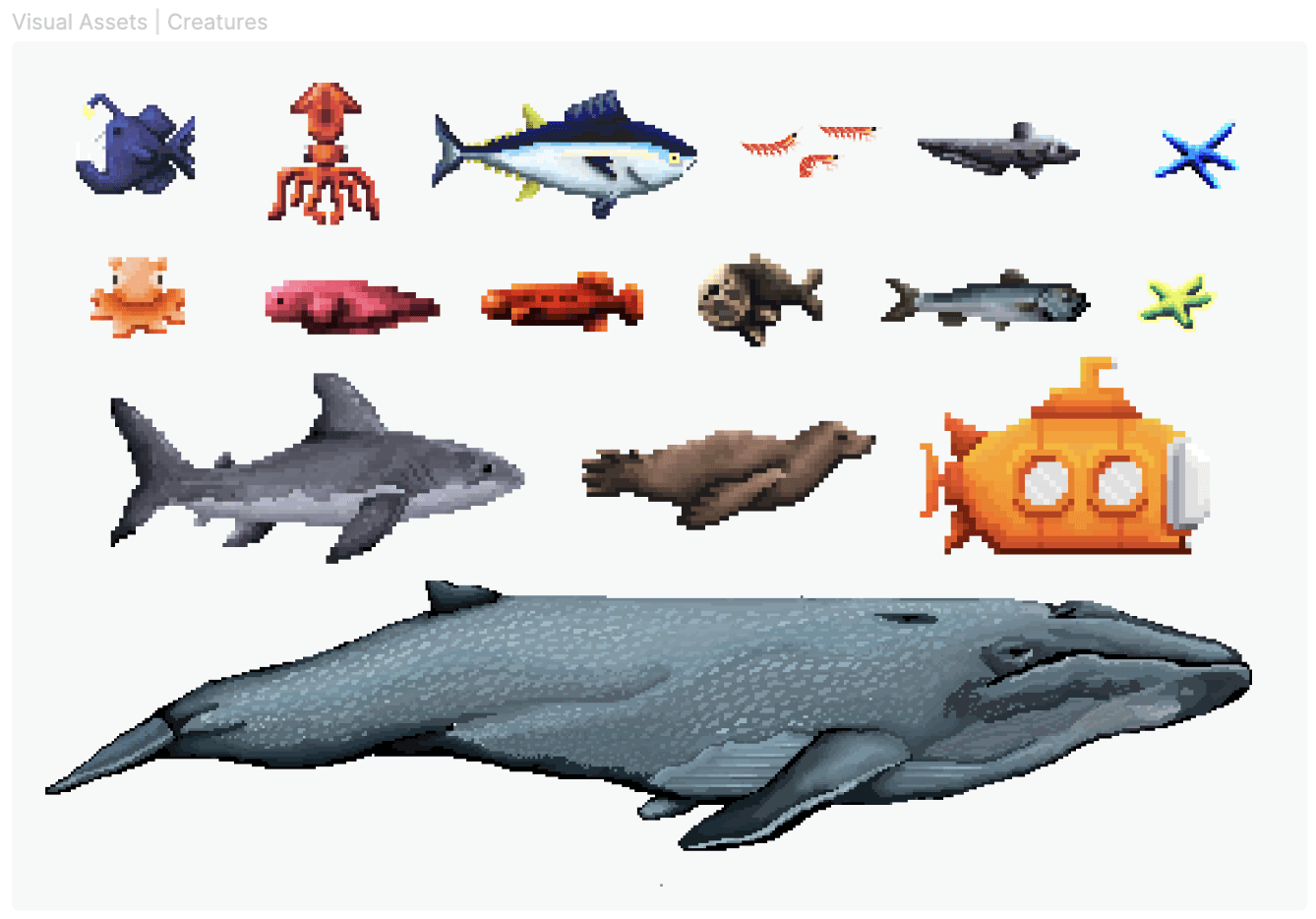
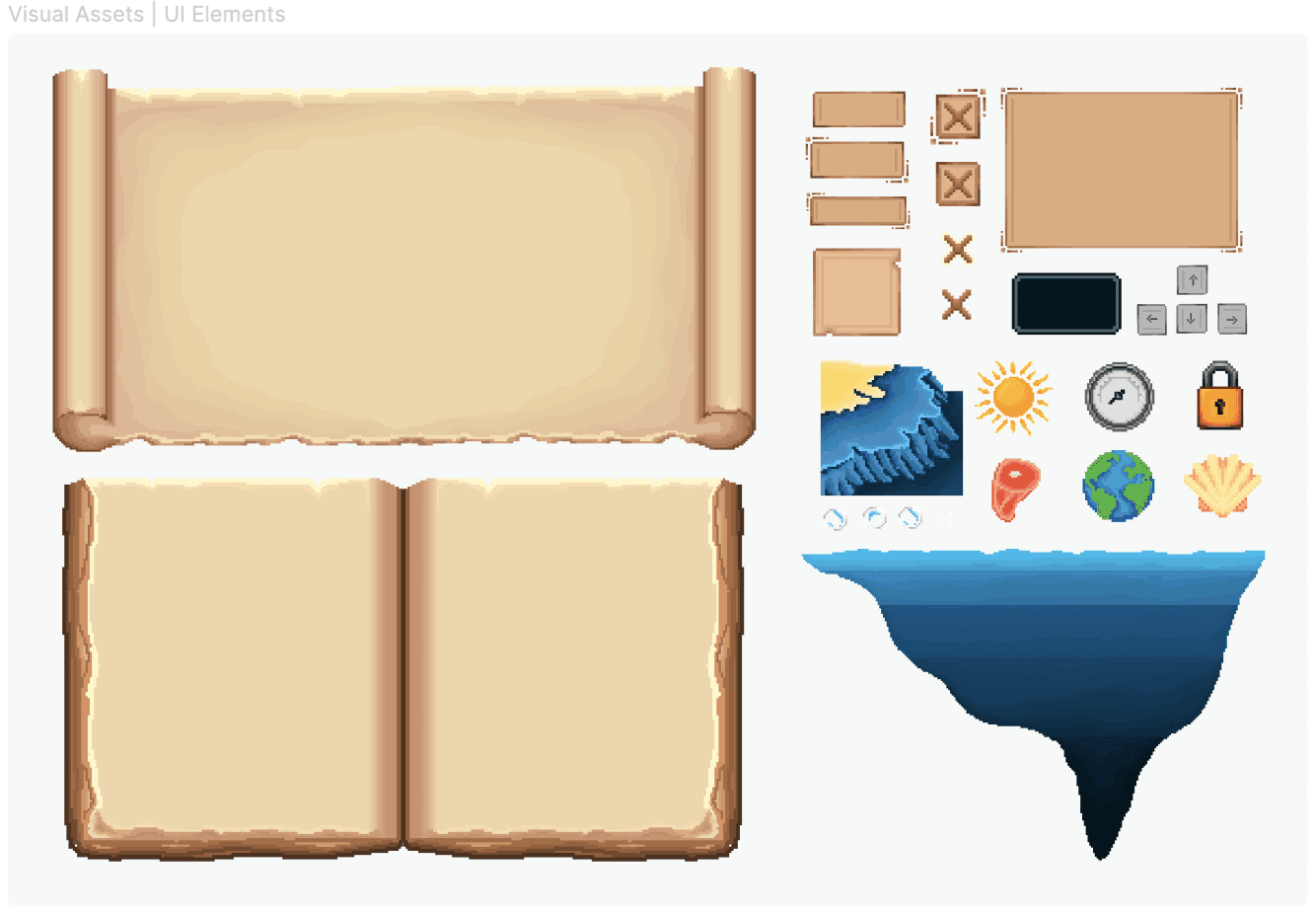
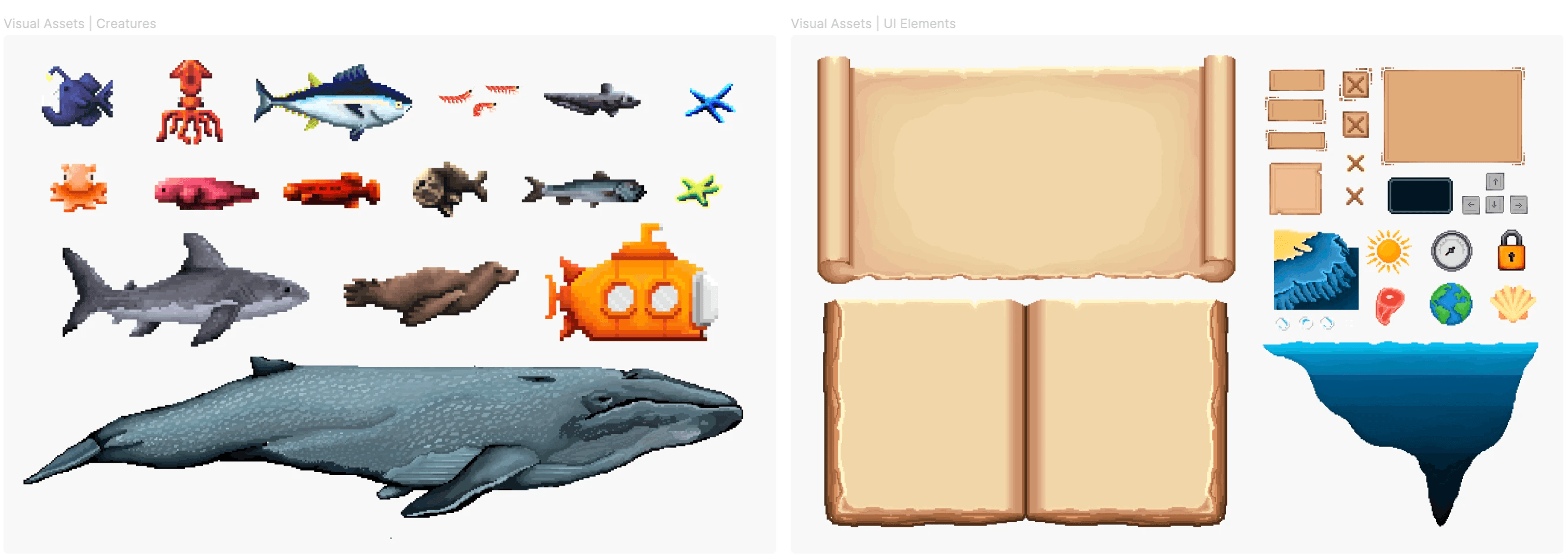
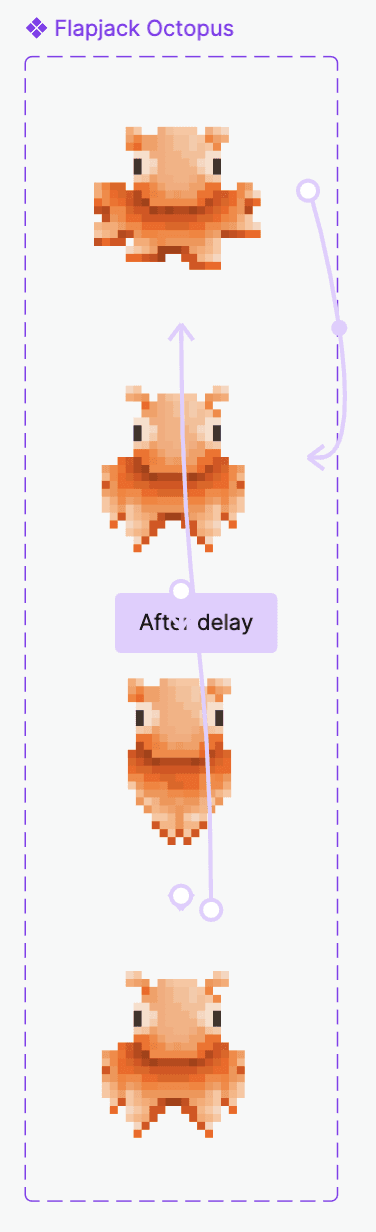
Custom Pixel Visual System
All assets were designed pixel-by-pixel in Aseprite and built into modular, animated Figma components
Prototyping
Built a high-fidelity Figma prototype simulating gameplay flow, creature encounters, journal interactions, and dynamic interface states. Connected screen flows and reusable components supported rapid iteration and navigation testing.
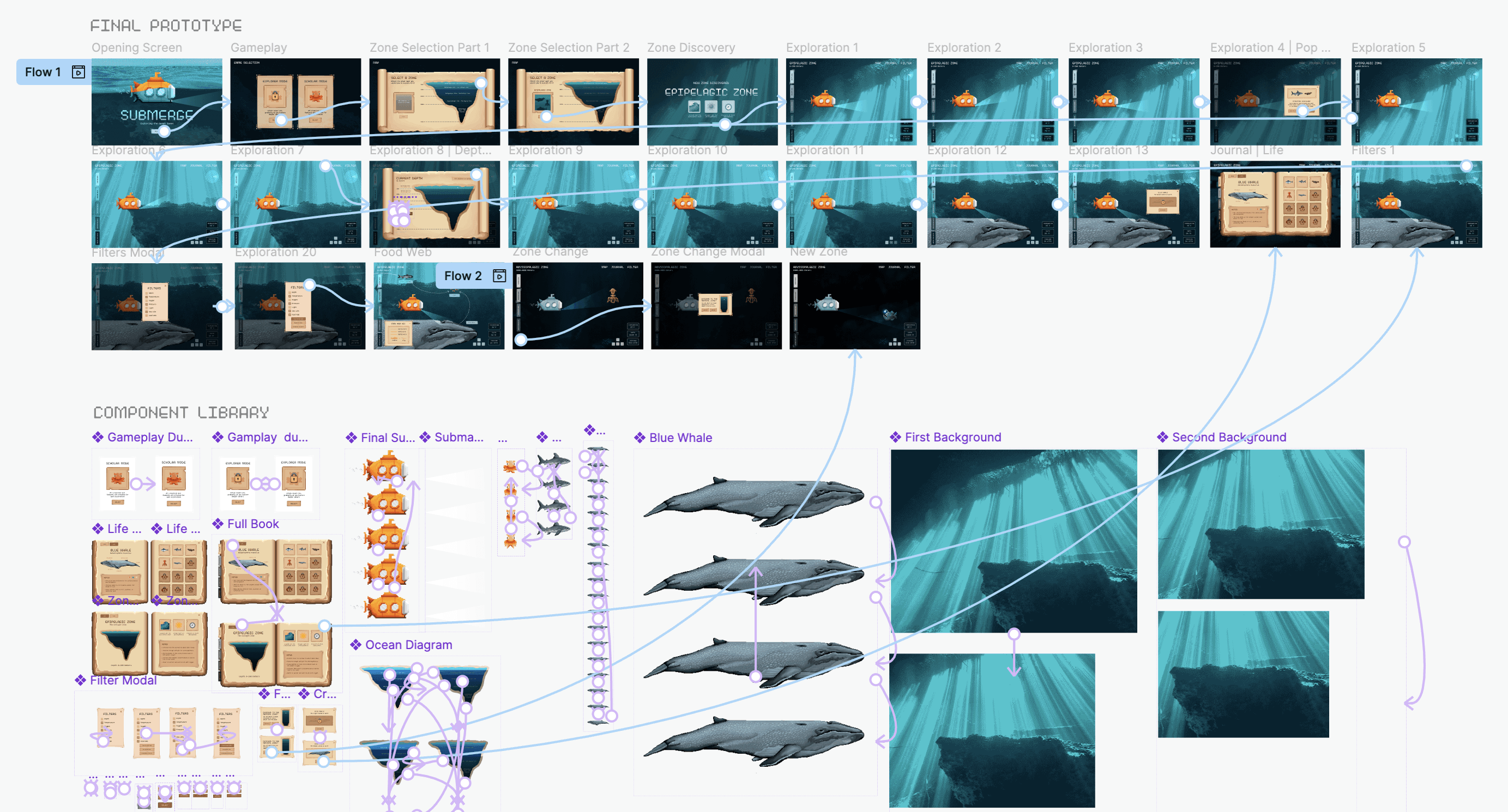
High-Fidelity
Experience Walkthrough
Choose Your Learning Path
Players begin by selecting a game mode that matches their preferred learning style, then choose an ocean zone to start their exploratory descent.
Encounter & Decide
As players enter a selected ocean zone, they encounter marine life and choose whether to investigate ecological relationships or continue exploring deeper environments.
Unlock New Discoveries
Encountering marine life reveals key ecological insights and adds the species to a cumulative journal, allowing players to track learning progress and deepen understanding of each ocean zone.
Understand Your Position
Players reference the depth map to view their current location within the ocean’s vertical zones, reinforcing spatial awareness and ecological scale.
Uncover System Complexity
Filter controls allow users to progressively reveal food web structures and ecological interactions, supporting advanced learning and conceptual depth.
Zone Transition & Scale Awareness
Users select a new depth zone and receive a visual confirmation that communicates the magnitude of the descent and reinforces spatial understanding.
Reflections
Designing Learning Through Interaction
Designing Submerge strengthened my ability to translate complex scientific systems into intuitive, interactive experiences. This project reinforced the value of progressive disclosure, spatial storytelling, and visual consistency in reducing cognitive overload while sustaining engagement. Creating the full visual system and interaction prototype independently also deepened my confidence in building scalable design solutions from concept through execution.
Continue Exploring
Pendo Internship
Adaptive platform for emotional awareness
Flux
Adaptive platform for emotional awareness
View Project